Now Reading: Dedicated Coworking Spaces vs. Cafe Hopping: Where Real Deep Work Happens Overseas
-
01
Dedicated Coworking Spaces vs. Cafe Hopping: Where Real Deep Work Happens Overseas
Dedicated Coworking Spaces vs. Cafe Hopping: Where Real Deep Work Happens Overseas

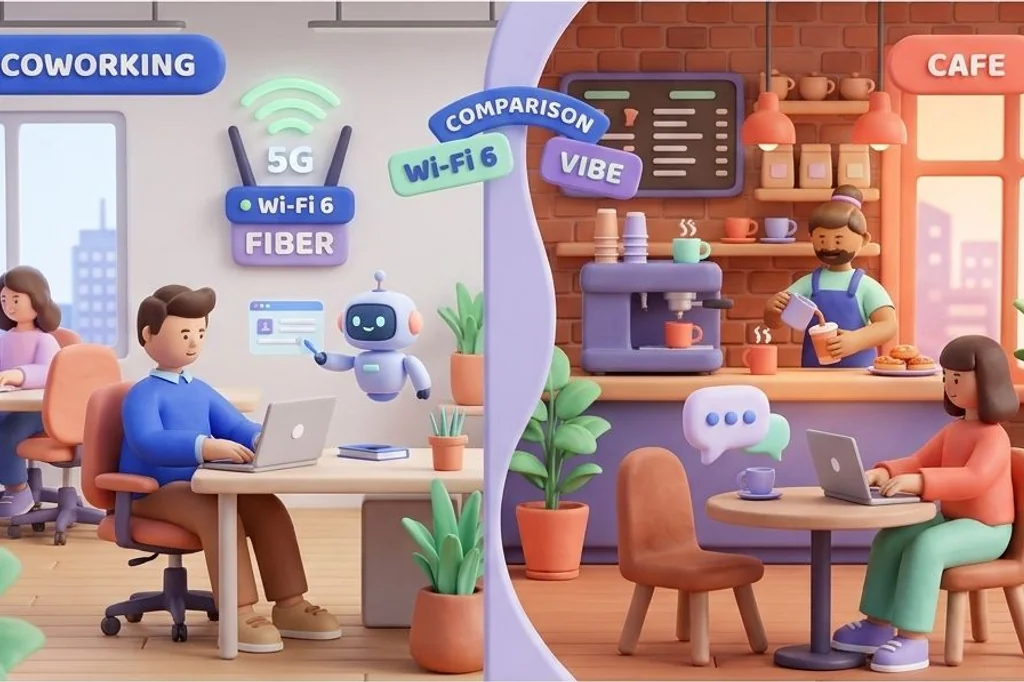
If you search for digital nomad content on social media, you will be inundated with romantic imagery: a smiling remote worker sitting on an oceanfront cafe deck in Bali or Costa Rica, sipping a flat white while effortlessly tapping away on a MacBook. What those thirty-second video clips never show is the furious glare of the cafe owner when your laptop has occupied their table for four hours, the screaming espresso steam wand that drowns out your client presentation, or the sudden Wi-Fi dropout that disconnects you in the middle of a critical server deployment.
In the real world of professional remote work, romantic cafe fantasies quickly clash with harsh commercial realities. After working from hundreds of cafes and dozens of dedicated coworking hubs across the world, I have developed strong, battle-tested opinions on where genuine cognitive focus takes place. In this guide, I break down the operational trade-offs between cafe hopping and dedicated coworking memberships to help you choose the right environment for your daily deliverables. To learn how I maintain clean data operations regardless of where I sit, browse my tutorial on cleaning messy CSV files with automated workflows.
Key Takeaways
Core insights on choosing between coworking spaces and cafe work environments:
- Cafe hopping creates constant micro-distractions, acoustic interruptions, and unstable bandwidth that derail complex knowledge tasks.
- Dedicated coworking spaces provide business-grade dual-redundant fiber connections and soundproof phone booths for client calls.
- Cafes excel as secondary creative change-of-pace environments for light tasks like inbox zero, journaling, and casual reading.
- Monthly coworking memberships foster valuable professional networks and collaborative peer accountability with fellow founders.
- The monthly cost of a coworking desk ($150 to $250) is easily recovered by eliminating cafe dining markups and boosting billable hours.
The Hidden Costs And Friction Of Cafe Hopping
On the surface, working from local coffee shops feels like the ultimate budget hack: why pay two hundred dollars a month for a coworking desk when you can buy a four-dollar iced latte and occupy a cafe table all afternoon? However, when you tally the hidden operational costs, cafe hopping is often remarkably expensive.
First, there is the social guilt tax. Out of basic decency, you cannot monopolize a four-person table for six hours on a single beverage purchase. You buy a second coffee, order an overpriced pastry, and eventually purchase lunch, easily spending fifteen to twenty dollars a day – which totals over four hundred dollars a month. Second, there is the constant restroom conundrum: every time you need to step away for five minutes, you must either pack up your entire laptop and cable setup, or risk leaving thousands of dollars of electronics unattended on a table while praying no opportunistic thief walks past. Furthermore, hunting for functional electrical outlets is an ongoing battle. Many modern cafes deliberately cover wall sockets or remove them entirely to deter laptop campers, leaving you staring anxiously at a dwindling fifteen-percent battery indicator while compiling a major software build or finishing a client presentation.
Infrastructure Reliability: Bandwidth And Acoustics
For serious software developers, data analysts, and executive consultants, commercial infrastructure is not a luxury; it is a baseline survival necessity. Public coffee shop networks are notorious for sudden latency spikes, throttling protocols, and unencrypted security vulnerabilities. When twenty customers connect to a consumer-grade router simultaneously, your Zoom video feed instantly degrades into frozen pixels and robotic audio.
Dedicated coworking hubs invest thousands of dollars into enterprise-grade networking architecture: commercial fiber lines, redundant secondary backup ISP connections that failover automatically, and dedicated soundproof phone booths lined with acoustic dampening foam. Knowing that you can hop into a phone booth at 3:00 PM for a high-stakes client presentation without hearing grinding coffee beans in the background provides immense psychological peace of mind. For workplace productivity and ergonomic health frameworks, review guidance from the International Organization for Standardization (ISO) Ergonomics of the Work Environment.
Operational Comparison: Coworking Vs. Cafe Hopping
To help you evaluate which environment matches your current professional demands, here is an honest head-to-head comparison:
| Operational Dimension | Public Cafe Environment | Dedicated Coworking Space | Strategic Verdict |
|---|---|---|---|
| Internet Stability | Consumer Wi-Fi, unpredictable latency spikes | Redundant enterprise fiber, Ethernet ports | Coworking wins for mission-critical tasks |
| Acoustic Control | Espresso machines, chatter, music playlists | Quiet zones, private call booths, silent areas | Coworking wins for client conference calls |
| Ergonomics & Seating | Wooden dining chairs, low cocktail tables | Adjustable task chairs, standing desks | Coworking wins for spinal lumbar health |
| Bathroom Security | Must pack up gear or risk unattended theft | Secure keycard access, trusted community | Coworking wins for zero friction breaks |
| Creative Atmosphere | Dynamic, sensory-rich, bustling energy | Focused, quiet, professional atmosphere | Cafes win for creative drafting sessions |
The Hybrid Rhythm: The Best Of Both Worlds
The optimal solution does not require declaring total war on coffee shops. Instead, high-performing remote professionals deploy a deliberate hybrid schedule based on cognitive energy levels and task requirements:
- Morning Deep-Work Block (Coworking Hub): Spend 8:30 AM to 1:00 PM at your dedicated coworking desk tackling high-cognitive tasks: system architecture, data modeling, client strategy, and scheduled video calls.
- Afternoon Creative Session (Neighborhood Cafe): At 2:30 PM, pack your laptop and stroll to a charming neighborhood cafe for ninety minutes. Use this session for low-stakes creative work: answering routine emails, drafting blog concepts, or reviewing reading material.
This hybrid rhythm satisfies your biological craving for environmental variety while safeguarding your professional deliverables from operational disruption. Changing physical scenery halfway through the day signals a fresh psychological shift to your brain, preventing the afternoon slump and keeping your creative thinking sharp until sunset. For more tips on building a mobile office, explore my complete breakdown on building an ergonomic mobile workstation for slow travel.
Vetting Coworking Spaces Before Purchasing A Monthly Pass
Not all coworking spaces are created equal. Some facilities prioritize party-heavy social events and neon beer taps over productive quiet zones. Before committing to a full monthly membership, follow these vetting steps:
- Buy a single day pass first: Never sign a monthly contract without spending one full workday inside the space to evaluate air conditioning, chair comfort, and acoustics.
- Count the soundproof call booths: A facility with eighty hot desks but only two phone booths guarantees long lines and frustration when you need to jump on an urgent call.
- Verify twenty-four-hour access: If you collaborate with clients across international time zones, ensure your keycard grants twenty-four-hour biometric entry. Check my strategies on managing time zones with asynchronous communication.
- Learn why slow-paced living fosters lasting focus in my comparison of slow travel versus fast backpacking.
Frequently Asked Questions
Are coworking day passes worth the expense for short visits?
If you have important client meetings or heavy upload tasks, purchasing a fifteen-dollar day pass is well worth the reliability and peace of mind compared to struggling on cafe Wi-Fi.
How do I politely work from a cafe without annoying the staff?
Choose cafes that clearly welcome laptop users, purchase a fresh drink or food item every ninety minutes, avoid taking voice calls inside the dining room, and never occupy large dining tables during peak lunch hours.
Can coworking memberships help fight the loneliness of solo travel?
Yes. Coworking spaces naturally gather ambitious, driven professionals from diverse cultural backgrounds. Joining community lunches, workshops, and weekly social events is one of the easiest ways to build meaningful friendships abroad.